


Jharkhand : A Land of Untapped Tourism and Employment Opportunities
– A Special Feature on Tourism and Job Creation

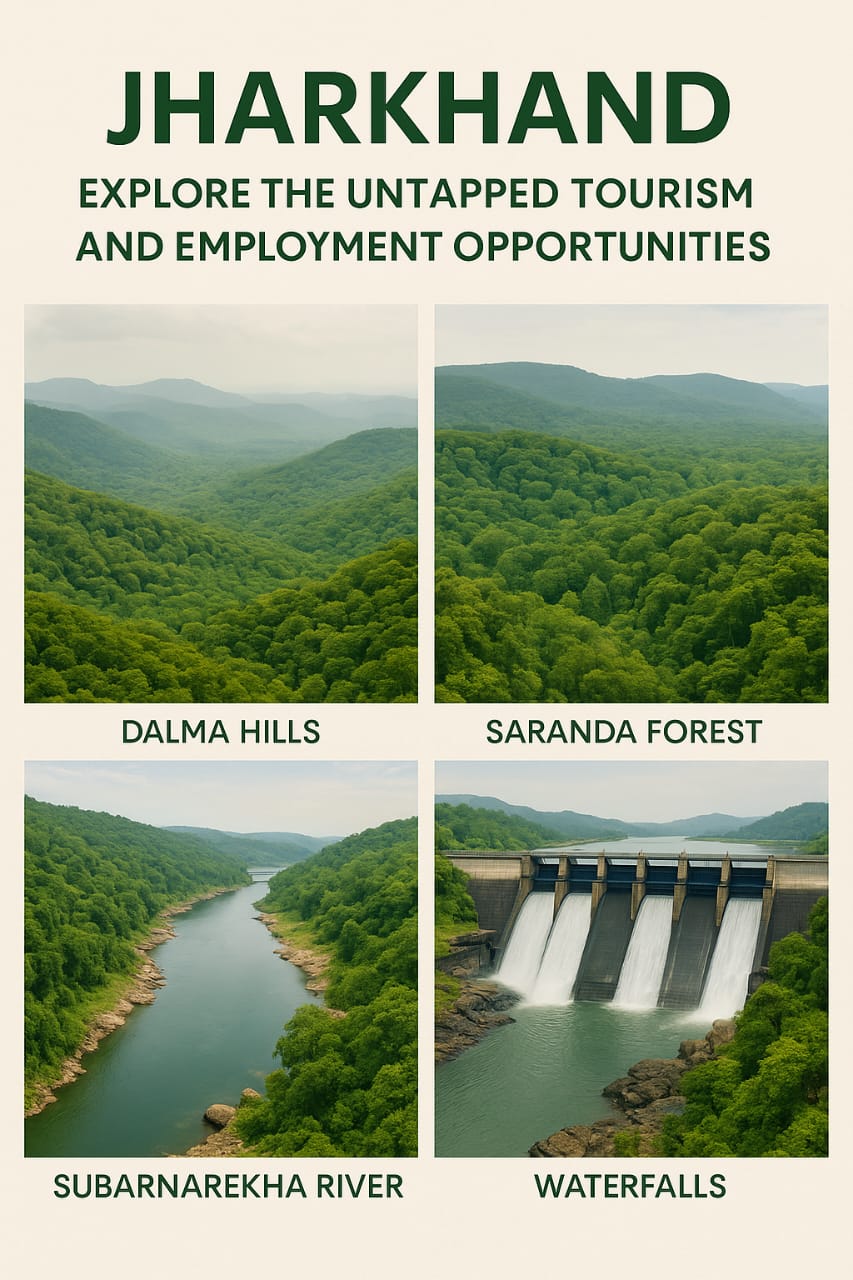
When we think of Jharkhand, images of lush green forests, majestic hills, flowing rivers, and cascading waterfalls come to mind. Rich in natural beauty and cultural heritage, Jharkhand remains an underrated gem on India’s tourism map. From the verdant Dalma Hills and vast Saranda forest to the crystal-clear waters of the Subarnarekha River, and from mighty dams to stunning waterfalls like Hundru and Dassam — Jharkhand has immense potential for tourism-led development and employment generation.
Major Tourist Attractions in Jharkhand:
- Dalma Hills – Located across East Singhbhum and Seraikela-Kharsawan districts, Dalma is famous for its elephant reserve and offers trekking and jungle safari experiences.
- Saranda Forest – India’s largest sal forest in West Singhbhum is rich in biodiversity and tribal culture, making it ideal for eco-tourism and cultural tourism.
- Subarnarekha River – This picturesque river flows through the heart of Jharkhand, and places like Chandil Dam and Galudih have become popular picnic and boating destinations.
- Famous Waterfalls – Hundru, Dassam, Jonha, Hirni, and Lodh waterfalls attract thousands of tourists every year, especially during the monsoon and post-monsoon seasons.
- Betla National Park – Located in Latehar, it is home to tigers, elephants, and other wildlife species, drawing nature enthusiasts and wildlife photographers alike.
- Major Dams and Reservoirs – Dams like Maithon, Panchet, Tilaiya, Kanke, and Chandil are not only vital for water storage and energy but also great for water sports, camping, and eco-resorts.
How Tourism Can Create Jobs:
- Local Guides and Trek Leaders – Training local youth to become nature guides, trek leaders, and cultural interpreters can generate immediate employment.
- Homestays and Eco-Tourism – Tribal villages can offer homestays that showcase traditional lifestyle and culture, creating sustainable income sources for locals.
- Handicrafts and Artisan Markets – Promoting local art such as woodcraft, stone carvings, textiles, and jewelry can boost the local economy and attract tourists.
- Food Tourism – Offering authentic Jharkhandi dishes like dhuska, pittha, sattu, chuda-dahi, and sindhi can provide livelihood opportunities through food stalls and ethnic restaurants.
- Photography, Adventure Tourism, and Film Shooting – The natural beauty of Jharkhand makes it an ideal destination for adventure sports, landscape photography, and film production, creating technical and creative job opportunities.
Role of Government and Community:
- Infrastructure Development – Roads, communication, lodging, sanitation, and safety need significant improvement around tourist spots.
- Skill Development – Establishing training centers for tour guides, hospitality workers, and craftspersons.
- Digital Promotion – Leveraging websites and social media platforms to highlight Jharkhand’s beauty and experiences.
- Sustainable Tourism Practices – Ensuring that tourism development is environmentally responsible and respectful of local traditions.
Conclusion:
Jharkhand is a land of breathtaking beauty and cultural richness. Yet, its tourism potential remains largely untapped. With visionary planning and community participation, tourism can become a powerful engine of economic growth and employment generation in the state. The time is ripe to position Jharkhand as India’s Green Tourism Hub and let the world discover its hidden treasures.
For more Article, News and Update visit www.manbhumupdates.com